
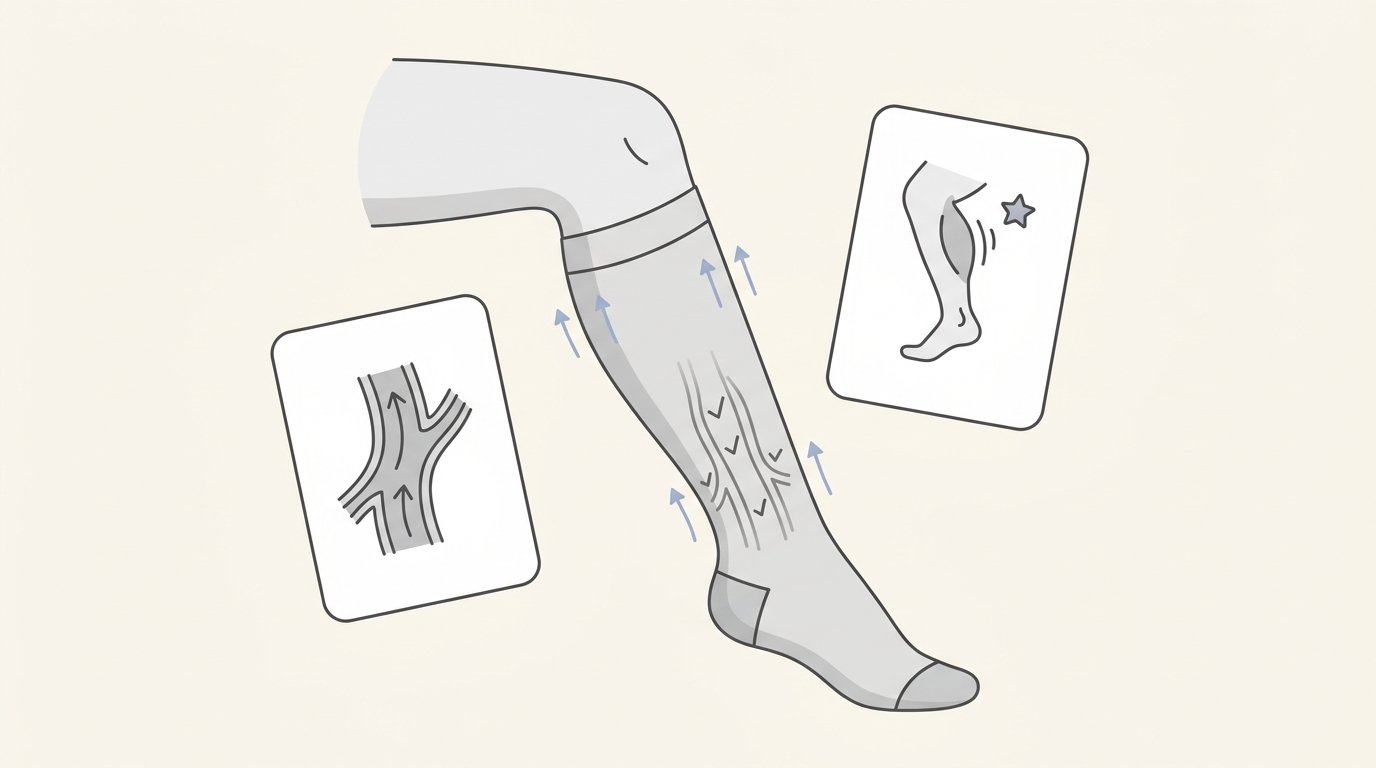
If you’ve strolled through an airport recently, you may have seen an increasing number of passengers sporting knee-high socks that resemble items from a medical supply shop. Your running companion may urge that they assist with your recovery. Compression socks have moved from hospital settings to common usage, but what do compression socks actually do, and are they worth trying?
The short answer: compression socks improve blood circulation in your legs by applying graduated pressure that’s tightest at the ankle and decreases as it moves up your leg. This simple mechanism can help prevent blood clots, reduce swelling, and ease discomfort for everyone from pregnant women to long-haul travelers.
Here’s a complete breakdown of how they work, who benefits most, and how to choose the right pair for your needs.
How compression socks work
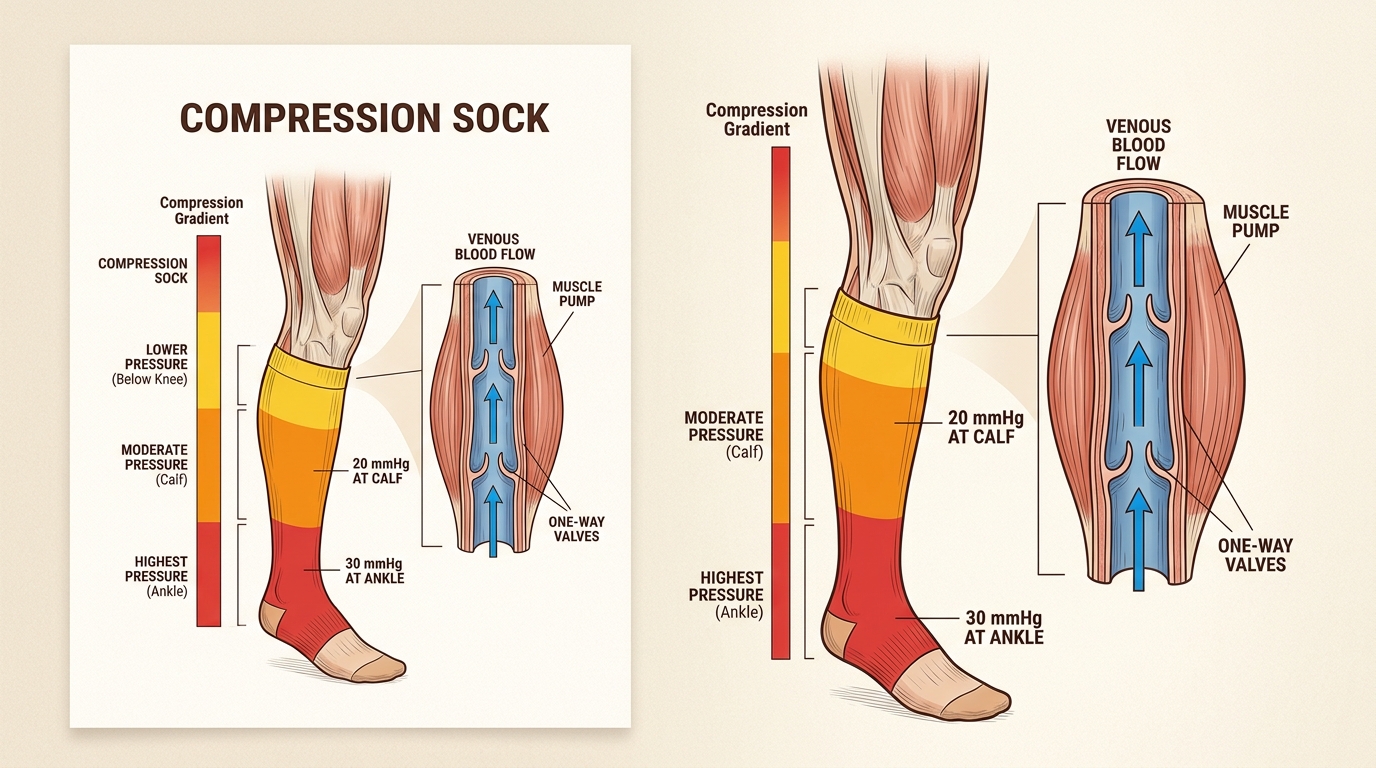
Compression socks use a simple but effective mechanical principle called graduated compression. The sock applies the most pressure around your ankle, typically between 15 and 40 millimeters of mercury (mmHg), and that pressure gradually decreases as the sock moves up your leg toward your knee.
Why does this matter? Your circulatory system already has a challenge to overcome: pumping blood from your feet back up to your heart against gravity. Your calf muscles normally help with this. Each time you walk or flex your calves, they act as a pump that pushes blood upward through your veins.
But when you sit or stand for long periods, that natural pumping action slows down. Blood can start to pool in your lower legs, leading to swelling, discomfort, and in some cases, dangerous blood clots.
This is where compression socks help. The external pressure they apply helps your veins push blood back toward your heart more efficiently. According to the American Heart Association, this graduated pressure “stimulates calf muscles when you move and can help prevent swelling.”
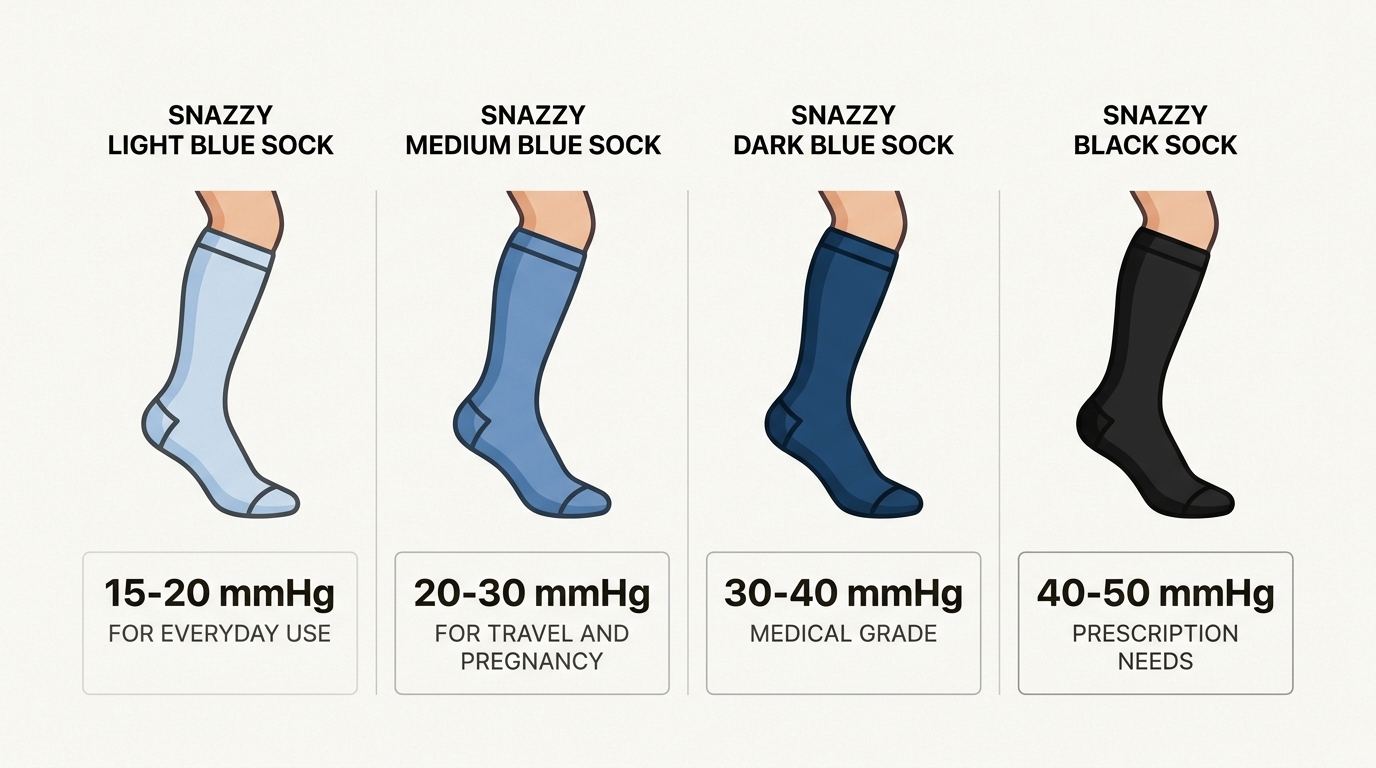
The pressure is measured in mmHg, the same unit used for blood pressure. Most over-the-counter compression socks range from 15-20 mmHg (light) to 20-30 mmHg (medium). Medical-grade compression can go higher, from 30-40 mmHg up to 40-50 mmHg, though these typically require a prescription.

Key benefits of wearing compression socks
The research on compression socks shows several well-documented benefits. Here’s what the evidence supports:
Improved blood circulation. The primary benefit, supported by multiple studies, is that compression socks help maintain healthy blood flow in your legs. This keeps oxygen-rich blood moving through your tissues and helps prevent the pooling that leads to discomfort.
Reduced leg swelling. By preventing fluid buildup (edema) in your legs, ankles, and feet, compression socks can significantly reduce puffiness and discomfort. This is especially helpful during pregnancy, long flights, or after standing all day.
Prevention of deep vein thrombosis (DVT). DVT occurs when a blood clot forms in a deep vein, usually in the leg. A Cochrane Database review that analyzed data from 2,918 people across 12 randomized trials found high-certainty evidence that wearing compression stockings reduced the risk of symptomless DVT during flights lasting more than four hours.
Support for varicose and spider veins. Compression socks help support vein walls and improve valve function, which can reduce the appearance and discomfort of varicose veins.
Faster exercise recovery. While the evidence on performance enhancement is mixed, studies consistently show that athletes wearing compression socks experience less muscle soreness and faster recovery after exercise.
The statistics paint a clear picture of why DVT prevention matters. According to the American Heart Association, approximately 666,000 people were hospitalized with DVT in the United States in 2020, and an additional 432,000 were hospitalized for pulmonary embolism (when a clot travels to the lungs). These conditions were mentioned as a cause in nearly 81,000 deaths in 2021.

Who should wear compression socks
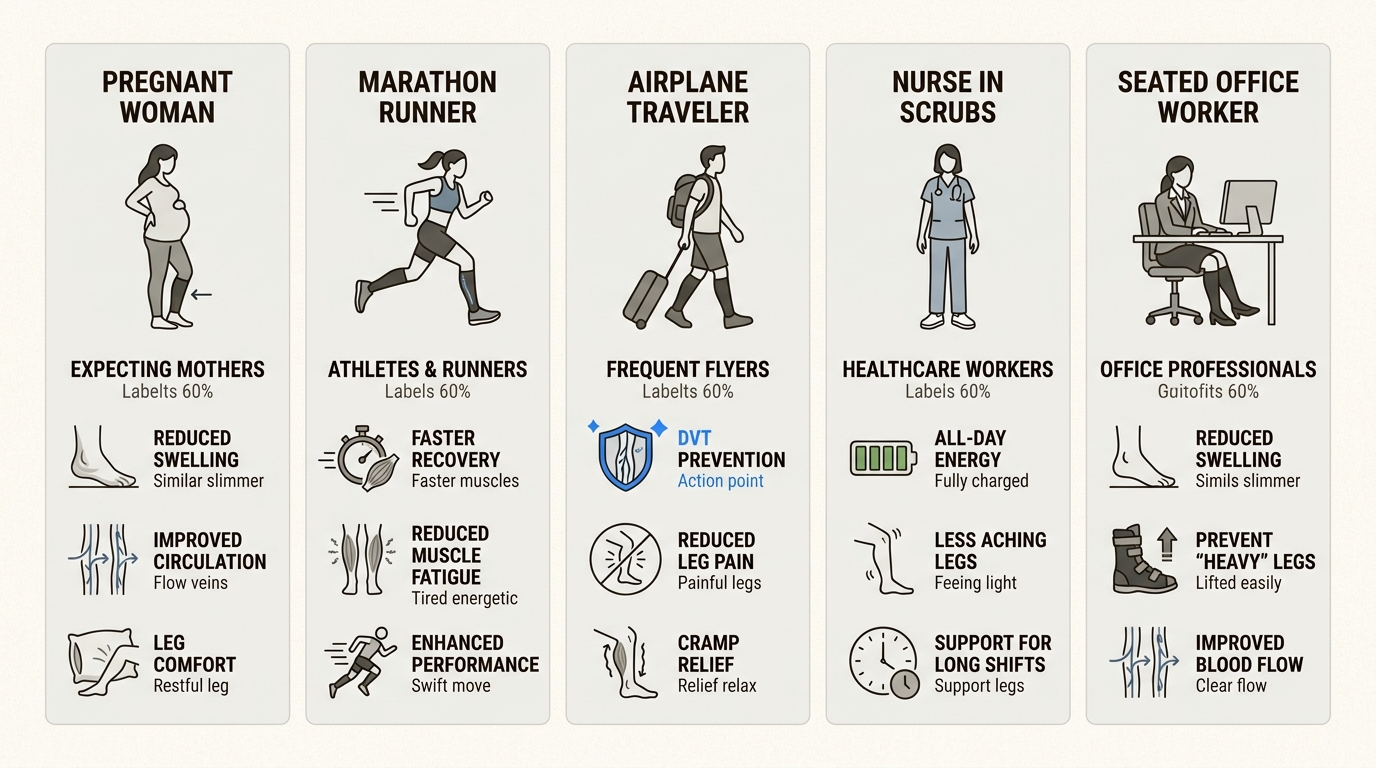
Compression socks aren’t just for hospital patients anymore. Several groups can benefit from regular use:
People with medical conditions
Doctors frequently recommend compression socks for patients with:
- Varicose veins and chronic venous insufficiency
- Diabetes-related circulation problems
- Lymphedema (fluid buildup in tissues)
- Post-surgical recovery, especially when bedridden
For these conditions, doctors typically recommend putting compression socks on in the morning before getting out of bed, when leg swelling is minimal.
Pregnant women
Pregnancy increases blood volume and pressure on your veins, particularly in the third trimester. This combination leads to leg swelling and a higher risk of blood clots. A recent study published in PMC found that wearing compression socks helped reduce leg swelling, increase blood flow, and decrease DVT risk in late pregnancy.
Frequent travelers
Long-haul flights create what vascular specialists call “a perfect storm for a clot.” Sitting in cramped seats for hours, combined with dehydration from cabin air, significantly increases DVT risk. The Cochrane review found that long flights make venous thromboembolism 1.5 to 4 times more likely.
However, Dr. Joshua Beckman, director of vascular medicine at UT Southwestern Medical Center, notes that while compression socks are fine to use, travelers should prioritize getting up to walk every couple of hours and staying hydrated.
Athletes and active individuals
Runners, basketball players, triathletes, and other athletes use compression socks for recovery. An analysis of nearly 1,000 studies found that while compression socks didn’t consistently improve performance during exercise, they did help athletes recover faster afterward with less muscle soreness and cramping.
Workers who stand or sit all day
Nurses, teachers, factory workers, retail staff, and anyone else who spends most of their workday on their feet can benefit from reduced leg fatigue. Conversely, office workers who sit for extended periods also benefit from the circulation boost compression socks provide.
Understanding compression levels
Not all compression socks provide the same level of pressure. Understanding the different levels helps you choose the right sock for your needs:
| Compression Level | mmHg Range | Best For |
|---|---|---|
| Light | < 15-20 mmHg | Everyday comfort, mild swelling, first-time users |
| Medium | 20-30 mmHg | Varicose veins, DVT prevention, travel, pregnancy |
| Moderate-High | 30-40 mmHg | Severe pain or swelling, medical grade |
| Firm | 40-50 mmHg | Severe vein problems, typically prescription required |
For most healthy people looking for general comfort or travel protection, light to medium compression (15-30 mmHg) is sufficient. Doctors generally recommend higher compression levels for specific medical conditions under their supervision.
Dr. Eri Fukaya, the Stanford vascular specialist who wears compression socks daily herself, suggests thinking about compression levels like choosing spice at a restaurant: “Do you want mild, medium or spicy?” She recommends starting with medium and adjusting based on how it feels.
Types of compression garments
Compression wear comes in several styles designed for different purposes:
Graduated compression stockings are the most common type. The pressure is strongest at the ankle and decreases up the leg. These are what most people picture when they think of compression socks.
Anti-embolism stockings, also called TED hose, are designed specifically for people who are not mobile, such as post-surgical patients on bed rest. They also use graduated compression but are optimized for people who aren’t walking around.
Non-medical support hosiery offers uniform compression throughout the garment rather than graduated pressure. These are available over the counter at pharmacies and are suitable for tired, achy legs rather than specific medical conditions.
Compression garments also come in different lengths. Knee-high socks are the most common and generally sufficient for most purposes. Thigh-high stockings and waist-high compression tights are available for people who need compression higher up the leg.
How to wear compression socks correctly
Getting the benefits from compression socks requires wearing them properly. Here’s what you need to know:
Timing matters. Put compression socks on in the morning before you get out of bed, when your legs are least swollen. Once you’re up and moving, fluid starts accumulating in your lower legs, making the socks harder to put on and less effective.
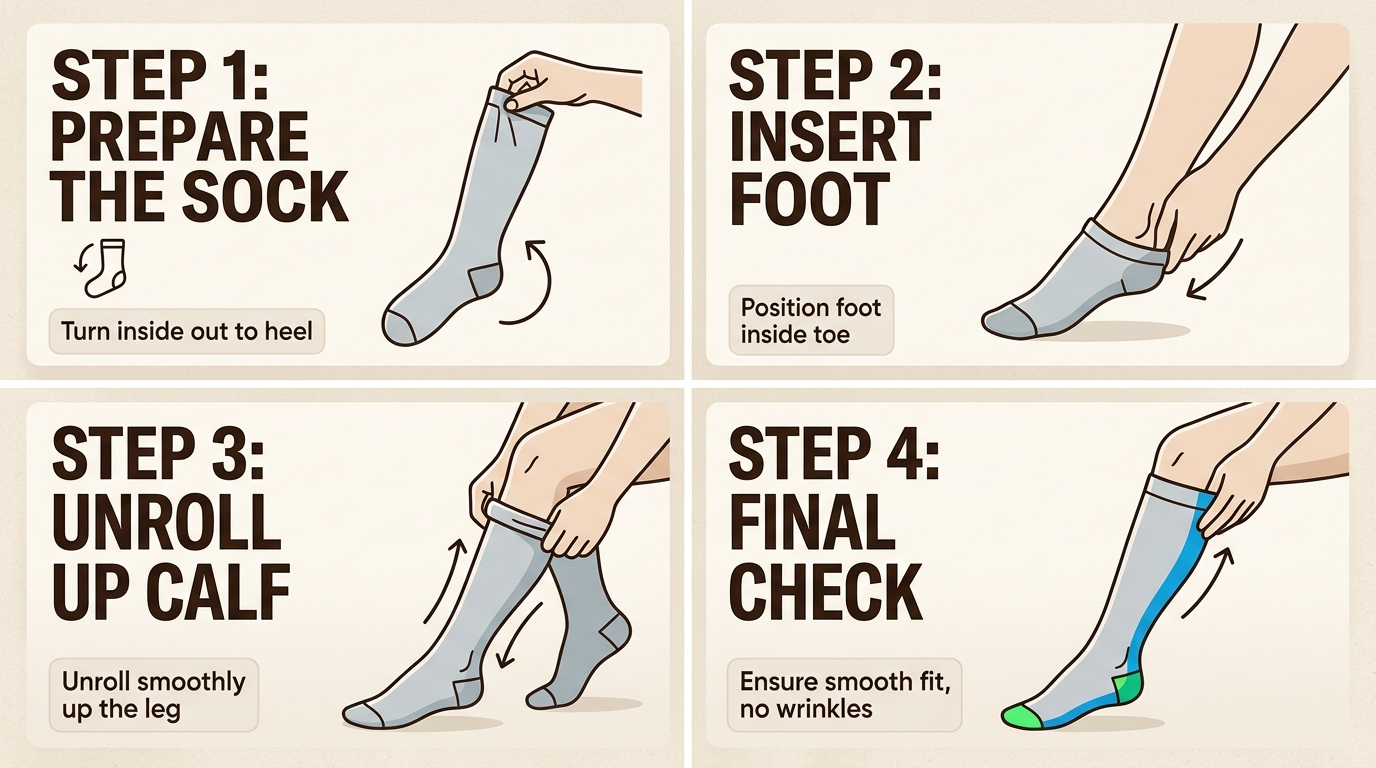
The rolling technique. Compression socks fit tightly, which makes them challenging to put on. Try this method: roll the sock inside out from the top down to the ankle, slip your foot in, then gradually unroll the sock up your leg. Make sure the fabric is smooth and not bunched anywhere.
Check the fit. Your compression socks should feel snug but not painful. They shouldn’t cause numbness, tingling, or discoloration. Knee-high socks should stop below the bend of your knee. If they’re too long and you roll the tops down, you create a tourniquet effect that can actually block circulation.
Duration of wear. Most people should wear compression socks during the day and remove them before bed. There’s typically no benefit to sleeping in them unless your doctor specifically prescribes overnight use.
Care and replacement. Hand wash or use the delicate cycle, then air dry. The elastic fibers break down over time, so replace your compression socks every 3 to 6 months depending on wear. Having at least two pairs lets you rotate them properly.
Helpful tips. If you struggle to get them on, try wearing rubber gloves for better grip, or apply a small amount of talcum powder to your legs first. Avoid applying lotion right before putting on compression socks, as moisture makes it harder to slide them into place.
Potential side effects and when to avoid
Compression socks are generally safe, but they aren’t right for everyone. Here’s what to watch for:
Common side effects include skin irritation, redness, itching, or general discomfort. These usually indicate improper fit rather than a problem with the compression socks themselves.
Who should avoid compression socks. People with severe peripheral artery disease (PAD) shouldn’t wear compression socks. PAD causes narrowing of the arteries in the legs, and external compression can further reduce blood flow to your feet.
When to consult a doctor. If you experience extreme pain, your legs or feet become discolored, or you notice any numbness or tingling, remove the socks immediately and consult a healthcare provider. These symptoms suggest the compression level may be too high or the fit is wrong.
Proper sizing is critical. Socks that are too tight can create a tourniquet effect at the top, actually blocking blood flow instead of improving it. If you gain or lose weight, you may need a different size. For prescription-grade compression, get professionally measured when your legs are least swollen.
Start improving your circulation today
Compression socks offer a simple, non-invasive way to support healthy blood flow, reduce leg swelling, and lower your risk of blood clots. Whether you’re managing a medical condition, preparing for a long flight, recovering from workouts, or simply spending long hours on your feet, graduated compression can make a noticeable difference in how your legs feel.
The key is choosing the right compression level and wearing them correctly. Start with light to medium compression (15-30 mmHg) if you’re new to compression wear, and consider consulting a healthcare provider if you have existing circulation issues or aren’t sure which level is right for you.
With proper fit and regular use, compression socks can be a valuable addition to your daily routine. Your legs work hard for you every day. Giving them a little extra support might be exactly what you need.
Common Myths About Compression Socks
Myth 1: Compression socks are only for elderly people
Truth: Compression socks are used by people of all ages, not just seniors.
Many people assume compression socks are only made for older adults with circulation issues. In reality, compression socks are widely used by athletes, runners, nurses, office workers, travelers, pregnant women, and people who stand for long hours. Their main purpose is to support blood flow, reduce swelling, and improve leg comfort.
Younger adults often wear compression socks during long flights, intense workouts, or demanding work shifts. Athletes may use them for muscle support and recovery, while professionals use them to reduce leg fatigue during the day. This makes compression socks a practical wellness product for everyday use, not just a medical item for elderly people.
Myth 2: Compression socks are uncomfortable
Truth: Modern compression socks are designed for comfort, breathability, and daily wear.
Another common myth is that compression socks feel too tight, too hot, or hard to wear. While compression socks are meant to apply pressure, quality products are designed with comfort in mind. Many modern options use breathable fabrics, moisture-wicking materials, seamless toes, cushioned soles, and stretch technology to improve fit and feel.
The key is choosing the correct size and compression level. Socks that are too small or too strong for your needs may feel uncomfortable, but properly fitted compression socks should feel supportive rather than painful. For everyday use, many people choose mild to moderate compression because it provides comfort without feeling restrictive.
Today’s compression socks also come in stylish colors, patterns, and athletic designs, making them more wearable for daily routines, travel, and sports.
Myth 3: Compression socks are only for medical use
Truth: Compression socks are used for both medical support and everyday lifestyle benefits.
It is true that doctors often recommend compression socks for certain medical conditions, such as varicose veins, edema, and recovery after surgery. However, compression socks are also widely used by healthy individuals who want to improve leg comfort and circulation during normal daily activities.
For example, travelers wear compression socks on long flights to reduce swelling and support circulation. Workers who sit or stand all day use them to help reduce leg heaviness and fatigue. Fitness enthusiasts and runners often wear compression socks during exercise or recovery periods to support muscle performance and reduce soreness.
Because of these benefits, compression socks are no longer limited to hospitals or clinical settings. They are now part of everyday wellness, sports recovery, travel comfort, and occupational support.
Frequently Asked Questions
How many hours a day should you wear compression socks to get the benefits?
Most people should wear compression socks during waking hours, putting them on in the morning and removing them before bed. This typically means 8 to 16 hours of wear depending on your schedule. For medical conditions, follow your doctor’s specific recommendations. There’s usually no benefit to wearing over-the-counter compression socks overnight unless your doctor prescribes it.
What do compression socks do for people who don’t have circulation problems?
Even without diagnosed circulation issues, compression socks can reduce leg fatigue, prevent swelling during long periods of sitting or standing, and support faster muscle recovery after exercise. Many people who work on their feet all day or travel frequently find them helpful for general comfort, even if they’re medically healthy.
Can wearing compression socks be harmful if you choose the wrong size?
Yes, improper fit can cause problems. Socks that are too tight can create a tourniquet effect that restricts blood flow, potentially causing pain, skin damage, or circulation issues. Signs of poor fit include numbness, tingling, discoloration, or significant discomfort. Always measure your legs properly and replace socks that have stretched out over time.
What do compression socks do differently than regular tight socks?
Regular tight socks apply uniform pressure, which can actually restrict circulation. Compression socks use graduated compression, meaning they’re tightest at the ankle and gradually decrease pressure up the leg. This specific pattern helps push blood upward toward the heart rather than simply squeezing the leg uniformly.
How quickly do compression socks start working when you put them on?
Most people notice reduced swelling and improved comfort within hours of putting on properly fitted compression socks. However, for medical conditions like varicose veins or chronic venous insufficiency, it may take several days or weeks of consistent use to notice significant improvement in symptoms.
What do compression socks do for athletes that regular recovery methods don’t?
While studies show mixed results on performance during exercise, compression socks consistently help with post-exercise recovery. They reduce muscle soreness, decrease inflammation, and may help clear lactic acid from muscles faster than passive recovery. The graduated pressure provides external support to muscles during movement, which some athletes find reduces fatigue during long training sessions.
Can you wear compression socks on just one leg if only one side has problems?
Yes, it’s perfectly fine to wear a compression sock on just one leg if you have a condition like varicose veins or swelling affecting only that side. In fact, vascular specialist Like Dr. Eri Fukaya suggests this approach for travelers who want to test the benefits: ‘You could wear it on one leg and not the other and see if one leg feels better than the other at the end of travel.’
References & Further Reading
- Effect of Compression Socks on Exercise Performance and Recovery — PMC / National Library of Medicine: https://pmc.ncbi.nlm.nih.gov/articles/PMC8439710/
- Effects of Wearing Compression Stockings on Exercise Performance: A Systematic Review — PMC / National Library of Medicine: https://pmc.ncbi.nlm.nih.gov/articles/PMC6985982/
- Graduated Compression Stockings — Evidence Review — PMC / Canadian Medical Association Journal: https://pmc.ncbi.nlm.nih.gov/articles/PMC4081237/
- Blood Clots, Varicose Veins, and Sore Legs: Can Compression Socks Help? — Yale Medicine: https://www.yalemedicine.org/news/blood-clots-varicose-veins-sore-legs-compression-socks-help
- Compression Stockings: Benefits and Side Effects — WebMD: https://www.webmd.com/dvt/choose-compression-stockings
- Do You Really Need Compression Socks on Long Flights? — American Heart Association: https://www.heart.org/en/news/2024/06/05/do-you-really-need-compression-socks-on-long-flights
- Compression Stockings and Prolonged Standing Work Study — PMC / Human Factors Journal: https://pmc.ncbi.nlm.nih.gov/articles/PMC10210207/
- Compression Socks and Postural Stability — Frontiers in Sports and Active Living: https://www.frontiersin.org/journals/sports-and-active-living/articles/10.3389/fspor.2024.1516182/full
- Do Compression Socks Work? Analysis of 51 Studies — Runners Connect: https://runnersconnect.net/compression-socks/
- Cochrane Review: Graduated Compression Stockings for DVT Prevention — Cochrane Database of Systematic Reviews: https://www.cochranelibrary.com/cdsr/doi/10.1002/14651858.CD001484.pub4/full
This article is for informational purposes only and does not constitute medical advice. Always consult a healthcare provider before beginning compression therapy, especially if you have a pre-existing medical condition.